
Trontinemab - Everything There Is To Know
July 1, 2026

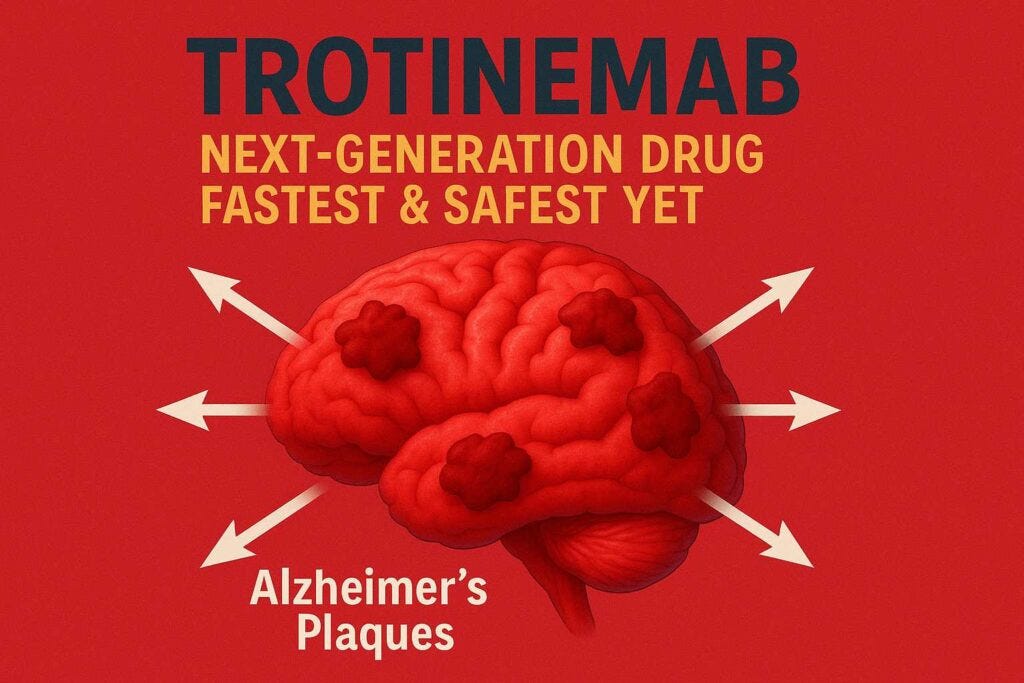
I think almost any medical professional and Alzheimer’s disease (AD) researcher will tell you that lecanemab and donanemab have demonstrated only modest success in slowing cognitive and functional decline in early AD. These are monoclonal antibodies targeting amyloid-beta in the brain. At the point of FDA approval, these two drugs were touted as giving hope to AD patients. Some of the excitement has waned as clinical usage has been disappointing.
St. Micheal’s Hospital in Toronto issued a press release yesterday about lecanemab. The release stated, “Eligibility can be difficult to confirm, treatment requires regular infusions and ongoing MRI monitoring, the cost is substantial, and the drug carries risks while the known benefits appear modest at best.” Not exactly a glowing endorsement.
My experience with lecanemab was frustrating. After 18 infusions, I had to stop due to frequent chills, shivers, and body aches. I will never know if there were any cognitive or AD progression slowing benefit.
Roche has an investigative monoclonal antibody (trontinemab) targeting amyloid-beta going into Phase 3 trials this year. Trontinemab is intended to have improved permeability across the blood-brain barrier (BBB). Penetrating the BBB is one of the challenges of lecanemab and donanemab. In fact, the BBB “excludes more than 98% of small-molecule drugs and all macromolecular therapeutics from access to the brain.”1
