
Pharma's Grip On The FDA
June 24, 2026

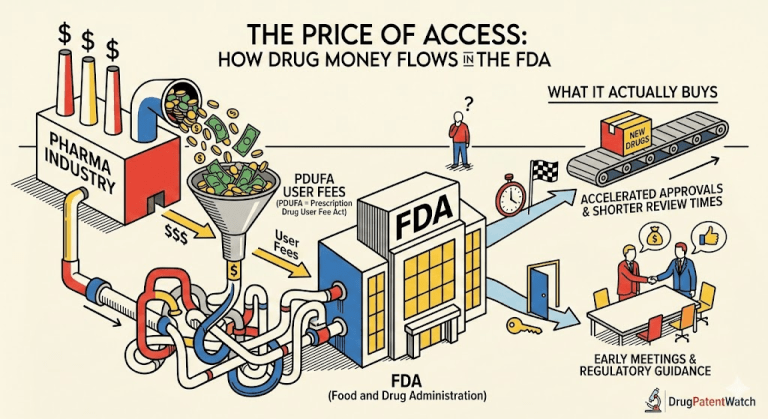
The Prescription Drug User Fee Act (PDUFA) was created in 1992.1 In a nutshell, PDUFA allows the FDA to collect fees from drug manufacturers. The funds are meant to supplement the FDA’s appropriated operating budget. The additional funds should be used to improve the efficiency of the Center for Drug Evaluation and Research (CDER).
The PDUFA was created as a reaction to the rapidly growing volume of new drug applications (NDAs) and biologics license applications (BLAs). The FDA’s appropriated budget was insufficient to hire enough staff to handle the volume of NDAs and BLAs. The average time to review and approve an NDA was 27 months. Drug developers, regulators, and patient advocates applied pressure on Congress to find a solution to the lengthy review process. Congress created the PDUFA and President H. W. Bush signed it into law in October 1992.
There are many regulatory parts to the PDUFA, and it has been revised over the years; however, the primary result is the pharmaceutical industry funds its own regulator.
Since 1992, the FDA operates under an inherent and systemic conflict of interest. While tasked with acting as an independent watchdog to protect public health, the agency relies on the very pharmaceutical companies it regulates to fund nearly 70% of its drug review budget.
The application fees for new drug review and approval are steep!
Application requiring clinical data $4,682,003 - Full new drug or biologic applications (NDAs/BLAs).2
Application not requiring clinical data $2,341,002 - This is exactly half of the full fee and is typically for supplements.
There are a few exemptions and waivers:
Small Business Waiver: A company employing fewer than 500 people can have the fee waived entirely for its very first drug application.
Orphan Drugs: Applications for drugs designated for rare diseases or conditions are exempt from PDUFA application fees.
In addition to the application fee, there is a Prescription Drug Program Fee. It is $442,213 per year per approved product (capped at five per company).
Americans always wonder why drugs are so much more expensive in the United States compared to Canada, Mexico, European Union countries, etc. While there are a number of reasons why drugs cost more in the United States, I believe the greatest reason are the FDA fees. The United States relies heavily on corporate cash to fund the FDA. Other countries generally fund the majority of their drug regulatory agencies with tax dollars.
